Fields of work

Normalization of relations/dialogue

NSI contributes to normalization of relations between Belgrade and Pristina

Beograd – Pristina; Photo: EPA / Valdrin Xhemaj

NSI facilitates open exchange on the Brussels dialogue and normalization process among opinion-makers from civil society from Kosovo and Serbia. Moreover, NSI provides evidence-based independent analyses and recommendations for decision-makers involved in the process.

Key Assumptions:

–   There is a need for fostering a regular in-depth dialogue between civil society actors engaged in the normalization of relations from both sides, so to be able to propose improvements to the Track I dialogue among the officials based on an in-depth understanding of internal political dynamics and sentiments on both sides and NSI is well-positioned to facilitate such dialogue.

–    NSI will represent and include diverse representatives of the Kosovo Serbs community in the dialogue between civil society actors from different sides, which will add important voices and perspectives to the process.

–   NSI is capable of delivering high quality analysis using the evidence collected through qualitative and quantitative research, and producing recommendations for which NSI is able to advocate with decision makers.

To see the projects we are implementing or have implemented in the area of Normalization of relations/Dialogue, see our Reference List.

Normalization of relations/dialogue

NSI contributes to normalization of relations between Belgrade and Pristina

Beograd – Pristina; Photo: EPA / Valdrin Xhemaj

NSI facilitates open exchange on the Brussels dialogue and normalization process among opinion-makers from civil society from Kosovo and Serbia. Moreover, NSI provides evidence-based independent analyses and recommendations for decision-makers involved in the process.

Key Assumptions:

–   There is a need for fostering a regular in-depth dialogue between civil society actors engaged in the normalization of relations from both sides, so to be able to propose improvements to the Track I dialogue among the officials based on an in-depth understanding of internal political dynamics and sentiments on both sides and NSI is well-positioned to facilitate such dialogue.

–    NSI will represent and include diverse representatives of the Kosovo Serbs community in the dialogue between civil society actors from different sides, which will add important voices and perspectives to the process.

–   NSI is capable of delivering high quality analysis using the evidence collected through qualitative and quantitative research, and producing recommendations for which NSI is able to advocate with decision makers.

To see the projects we are implementing or have implemented in the area of Normalization of relations/Dialogue, see our Reference List.

Trustbuilding and Dealing with the Past

New Social Initiative supports different approaches to Trustbuilding and Dealing with the Past initiatives among communities

NSI intents to achieve several outcomes in order to meet this goal:

– NSI will be the channel of positive stories on inter-ethnic relations and reaching wider public by offering the innovative communication tools for visual and public affairs influencers (YouTubers, Instagramers, TikTokers, Journalists, Professionals and CSOs);

– NSI will be the convener and facilitator for structured exchange of attitudes and opinions, thus supporting trust building and collaboration among CSOs speaking on behalf of different ethnic groups in Kosovo;

– NSI will harvest and spread counter-narratives and positive stories, thus creating space for exchange and dialogue by partnering with media and digital outlets across Kosovo.

Key Assumptions:

–   New innovative solutions for trust building will resonate better with citizens, especially youth, and the positive frame of the inter-ethnic relations could disrupt diminish the strength and malign influence of the negative narratives they were socialized in;

Photo: Emerging Europej

–  “Pockets of Freedom” or forums, which remove the publicity constraints, will strengthen the bonds between CSOs from different communities, thus increasing the trust between them and allowing them to establish stronger coalitions on crucial societal topics, especially those related to the inclusion of the non-majority communities;

–  Engaging different audiences with opposite narratives on the same topic will soften the rooted stereotypes about the “other” communities and address the grievances from the past, and will fertilize the ground for trust building.

To see the projects we are implementing or have implemented in the area of DwP/trust-building, see our Reference List.

Trustbuilding and Dealing with the Past

New Social Initiative supports different approaches to Trustbuilding and Dealing with the Past initiatives among communities

Photo: Emerging Europej

NSI intents to achieve several outcomes in order to meet this goal:

– NSI will be the channel of positive stories on inter-ethnic relations and reaching wider public by offering the innovative communication tools for visual and public affairs influencers (YouTubers, Instagramers, TikTokers, Journalists, Professionals and CSOs);

– NSI will be the convener and facilitator for structured exchange of attitudes and opinions, thus supporting trust building and collaboration among CSOs speaking on behalf of different ethnic groups in Kosovo;

– NSI will harvest and spread counter-narratives and positive stories, thus creating space for exchange and dialogue by partnering with media and digital outlets across Kosovo.

Key Assumptions:

–   New innovative solutions for trust building will resonate better with citizens, especially youth, and the positive frame of the inter-ethnic relations could disrupt diminish the strength and malign influence of the negative narratives they were socialized in;

–  “Pockets of Freedom” or forums, which remove the publicity constraints, will strengthen the bonds between CSOs from different communities, thus increasing the trust between them and allowing them to establish stronger coalitions on crucial societal topics, especially those related to the inclusion of the non-majority communities;

–  Engaging different audiences with opposite narratives on the same topic will soften the rooted stereotypes about the “other” communities and address the grievances from the past, and will fertilize the ground for trust building.

To see the projects we are implementing or have implemented in the area of DwP/trust-building, see our Reference List.

Citizen participation

NSI is working on increasing non-majority participation in decision making processes for the purpose of getting better services and making institutions more accountable

Source: NSI photo archive

NSI works to achieve this goal on both supply and demand side of the citizen participation: 1) on the demand side, the outcomes of our engagement are the benefits that citizens have by utilizing the mechanisms of citizens’ participation, and 2) the creation of low profile community spaces which will support resonant voices; 3) on the supply side, the outcomes of our activities will be established and improved participation mechanisms in the institutions (in mostly Kosovo Serb majority municipalities).

Key Assumptions:

–    The increased demand for the better services will boost the efficiency of the institutions and increase their accountability;

–    Resonant voices are reluctant to speak out because of the non-pluralistic nature of the political arena of the Kosovo Serb community, but their participation in closed group discussions will encourage them to speak up in the future and preserve social capital required for any collective action;

–   Kosovo Serb majority municipalities will be open for cooperation on non-controversial issues, and will accept the citizen participation mechanisms.

To see the projects we are implementing or have implemented in the area of Citizen Participation, see our Reference List.

Citizen participation

NSI is working on increasing non-majority participation in decision making processes for the purpose of getting better services and making institutions more accountable

Source: NSI photo archive

NSI works to achieve this goal on both supply and demand side of the citizen participation: 1) on the demand side, the outcomes of our engagement are the benefits that citizens have by utilizing the mechanisms of citizens’ participation, and 2) the creation of low profile community spaces which will support resonant voices; 3) on the supply side, the outcomes of our activities will be established and improved participation mechanisms in the institutions (in mostly Kosovo Serb majority municipalities).

Key Assumptions:

–    The increased demand for the better services will boost the efficiency of the institutions and increase their accountability;

–    Resonant voices are reluctant to speak out because of the non-pluralistic nature of the political arena of the Kosovo Serb community, but their participation in closed group discussions will encourage them to speak up in the future and preserve social capital required for any collective action;

–   Kosovo Serb majority municipalities will be open for cooperation on non-controversial issues, and will accept the citizen participation mechanisms.

To see the projects we are implementing or have implemented in the area of Citizen Participation, see our Reference List.

It often sounds like a cliché to say that municipalities are the first door where citizens can address their problems, but when taken seriously, this helps us understand the centrality of local governance and the way municipalities operate. The placement of a parking lot can affect the daily routine of a parent waiting for their child after school; the bus schedule can reshape how a working day is organized; or a few more or less seconds at a traffic light can prove decisive in an emergency. These seemingly small decisions illustrate the importance of municipalities in shaping citizens’ everyday lives and their trust in institutions.

The same logic applies to interethnic coexistence: the way institutions function, how representative and present municipalities are in dialogue processes, how inclusive pol- icies are designed and implemented, and the quality of municipal programs all have a direct impact on building trust and fostering cooperation between communities.

In the context of normalization between Serbia and Kosovo, however, the presence of municipalities at the negotiating table has always been absent. Although municipalities are the frontline of service delivery and citizen trust, they remain excluded from the EU-facilitated dialogue, the main channel for normalization between the two countries. Agreements often touch directly on municipal competences, such as policing, civil reg- istries, and energy, yet municipalities are not visibly represented at the table.

The guiding question of this policy brief is therefore: To what extent have municipali- ties been present in the EU-facilitated dialogue, and what does their absence mean for implementation and legitimacy? This question is essential for advancing an inclusive and multiethnic society in Kosovo, as local actors stand at the frontline of interethnic relations. For citizens, municipal decisions are not merely technical; they shape daily life and perceptions of shared spaces and social security. For minority communities in particular, the functionality of these mechanisms is directly linked to fair representation and the protection of rights.

This policy brief argues that the decentralization of dialogue in Kosovo can serve as a genuine tool for integration only if the role and presence of municipalities are strength- ened and directly represented in discussions between the two states. The international community especially the European Union as the main facilitator of the dialogue should ensure greater municipal involvement in the negotiation process. Bringing municipalities closer to the drafting of agreements would not only improve their practicality and en- forceability on the ground but also strengthen the legitimacy of the dialogue by making it more responsive to citizens’ everyday needs.

With respect to methodology, this policy brief relies exclusively on document analysis as its research method. The analysis covers both primary and secondary sources in order to trace how municipalities have (or have not) been included in the EU-facilitated dia- logue and how their absence affects implementation.

• Primary sources include official agreements reached between Kosovo and Serbia from 2011 to 2023, as published by the European Union, the Government of Kosovo, and the Government of Serbia. In addition, EU press releases and statements from the European External Action Service (EEAS) were examined to capture the official framing of the dialogue process.

• Secondary sources consist of reports, policy papers, and analyses produced by civil society organizations and think tanks such as the Kosovar Centre for Security Studies (KCSS), Belgrade Centre for Security Policy CSP), the Balkans Policy Research Group (BPRG), Friedrich Ebert Stiftung (FES), and other relevant actors.

Together, these sources provide the basis for assessing both the formal role assigned to municipalities in dialogue-related agreements and the broader perceptions of their absence in shaping implementation and legitimacy on the ground.

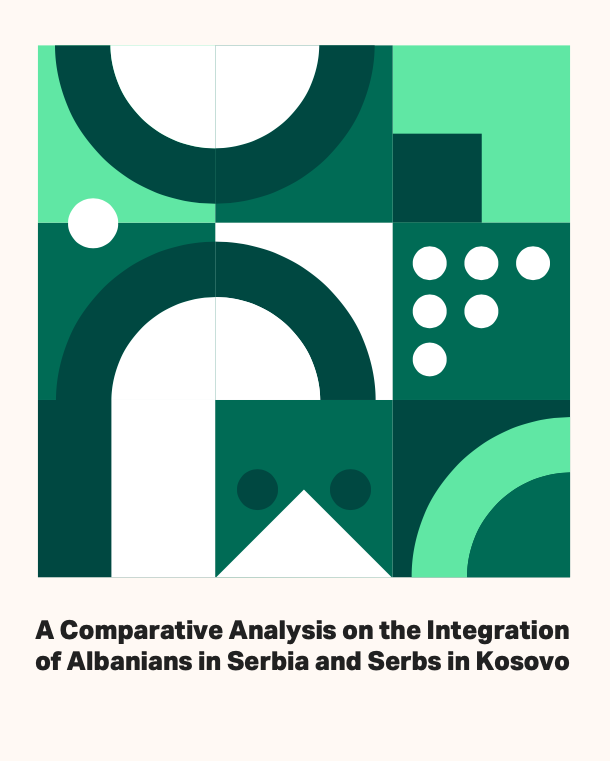
The integration of minorities is a critical challenge in the normalization process between Kosovo and Serbia. This study examines the integration of Albanians in Serbia and Serbs in Kosovo, highlighting the implications for minority inclusion in post-conflict societies. Policies, laws, and political debates directly impact the daily lives of individuals. For Al- banians in Serbia, particularly in the Presheva/Preševo Valley, this often means limited political participation, restricted language rights, and economic challenges. For Serbs in Kosovo, especially those outside the north, the main concerns are personal security, trust in institutions, and cultural preservation.

Integration is not just an abstract concept; it is about dignity, belonging, and envisioning a future where communities can coexist peacefully. The treatment of minorities by these states is crucial for regional stability, democratic credibility, and the everyday realities of citizens seeking normalcy after prolonged conflict.

By comparing these two cases, this study aims to highlight both progress and remaining obstacles. It seeks to demonstrate how inclusive governance can foster coexistence and peace, offering valuable lessons for reconciliation in divided societies.

Methodologically, this report employs a combination of research methods to compre- hensively address the research question. The analytical method was utilized to review literature, legal frameworks, and reports related to minority integration. The compara- tive method served as the core approach, enabling a side-by-side analysis of Albanians in Serbia and Serbs in Kosovo. The descriptive/historical method was used to trace the development of minority rights since the Kosovo conflict, providing context for current challenges.

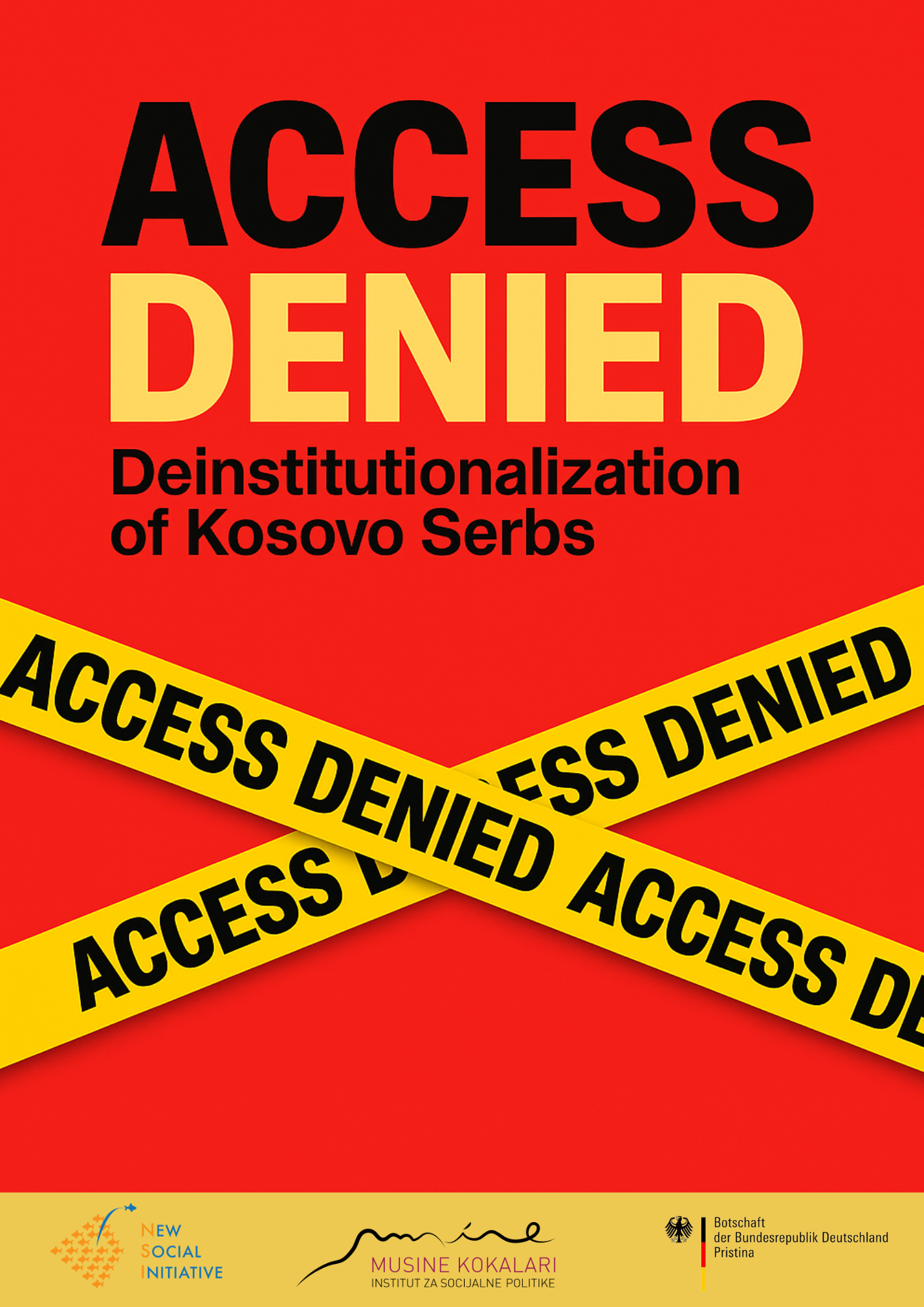
This report provides a detailed analysis of the evolving dynamics within the Kosovo Serb community, based on insights from five Policy Task Group sessions conducted between April and June 2025. These sessions brought together a diverse group of experts, including civil society representatives, local stakeholders, and policy analysts, to address pressing political, economic, security, institutional, and cultural challenges. Employing a qualitative research approach, the discussions captured nuanced perspectives and lived experiences to inform evidence-based policy development and advocacy strategies. Participants offered grounded, actionable insights into the risks and opportunities shaping interethnic relations, governance, and institutional trust, emphasizing the need for inclusive, community-driven solutions to foster integration and stability.

This report is part of the project “Dialogue, Solution, Future (DSF)”, implemented by New Social Initiative (NSI) in partnership with the Institute for Social Policy “Musine Kokalari”, with financial support from the Federal Foreign Office. The views and opinions expressed in this report are those of the participants and do not necessarily reflect the official position of the Federal Foreign Office or any other partner institution.

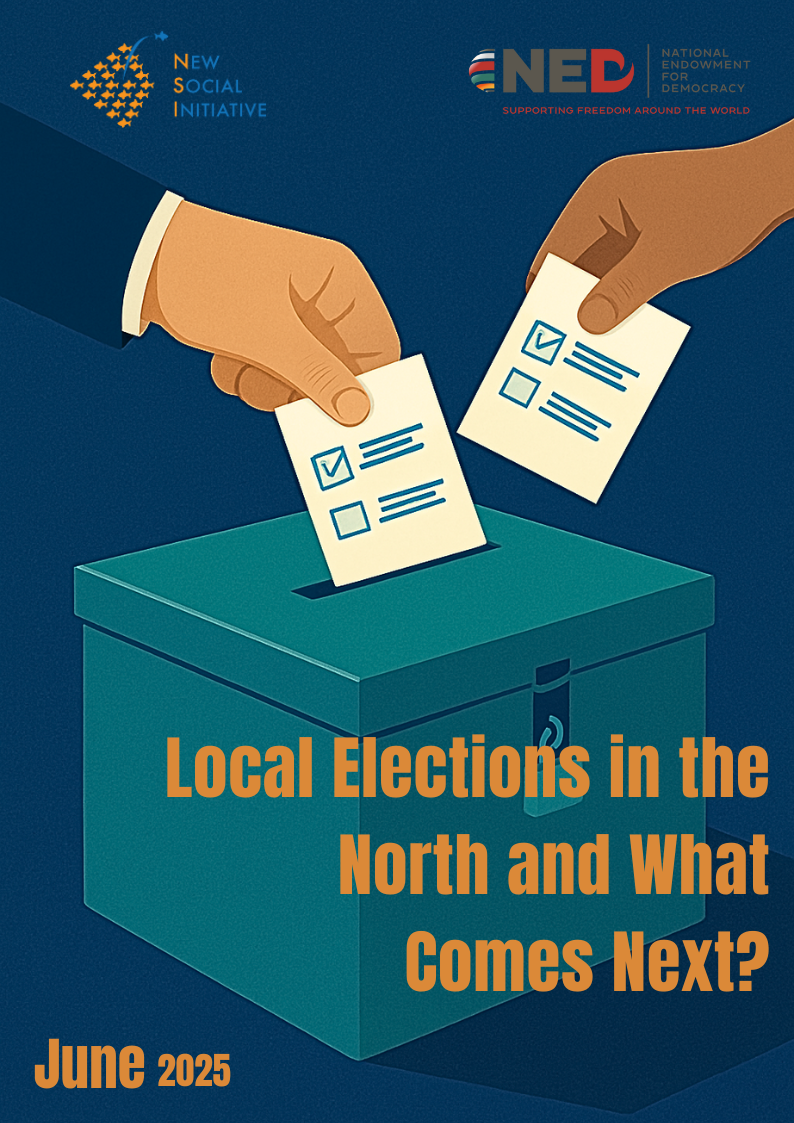
Kosovo is currently grappling with an institutional and political crisis, marked by growing uncertainty and fragility in its northern municipalities. As the region prepares for local elections, the atmosphere remains tense, with reintegration efforts hampered by persistent structural and human resource deficiencies. Legal ambiguity and administrative stagnation continue to characterize governance in the north, where public trust in institutions is steadily declining, fueled by perceptions of selective justice and uneven application of the rule of law.

This report is based on the discussions, which were held under the Chatham House Rule. This report was made possible with support from the National Endowment for Democracy (NED). The opinions and views of the report does not necessarily stat or reflect the views of NSI, NED, or of individual participants. It is simply a brief summary of the discussions.

This paper presents the attitudes, concerns, and recommendations shared by
residents who participated in the Inter-community Trust Tours (ITTs)—a series
of locally focused dialogue sessions conducted as part of the project
“Strengthening Community Relations in Kosovo.” The initiative, supported by
UNMIK and implemented by New Social Initiative, aims to foster
inter-community dialogue, empower civil society, and build trust through
inclusive, grassroots engagement

The Civil Society Report on Human Rights in Kosovo provides an overview of the human rights situation in Kosovo in 2024. It includes main issues/developments, human rights violations and challenges to the effective realization of human rights in practice. The Report is produced jointly by civil society organizations (CSOs) working in a diverse number of areas relevant to human rights. This Report aims to serve as an independent tool to assess the overall human rights situation in Kosovo, thus filling an existing gap in joint reporting on human rights in Kosovo at the local and international levels, in addition to enhancing cooperation and coordination between CSOs.

New Social Initiative monitors media and social media in cooperation with Pikasa Analytics INC, a data analytics company specializing in developing and implementing tools, software, and machine learning algorithms. The tool allows monitors to count the nominal number of articles on particular topics and see the level of audience engagement.

Engagements on websites are defined as news articles from each outlet’s website shared on Facebook and the total number of likes, shares, and comments they have collected. Social media engagement encompasses likes, shares, and comments gathered from all social media channels (Facebook, Instagram, YouTube, TikTok, LinkedIn) for all posts, including photos, videos, and text. The assessment of engagement extends beyond the media outlets to encompass a variety of social media accounts, including those of politicians and opinion makers

New Social Initiative monitors media and social media in cooperation with Pikasa Analytics INC, a data analytics company specializing in developing and implementing tools, software, and machine learning algorithms. The tool allows monitors to count the nominal number of articles on particular topics and see the level of audience engagement.

Engagements on websites are defined as news articles from each outlet’s website shared on Facebook and the total number of likes, shares, and comments they have collected. Social media engagement encompasses likes, shares, and comments gathered from all social media channels (Facebook, Instagram, YouTube, TikTok, LinkedIn) for all posts, including photos, videos, and text. The assessment of engagement extends beyond the media outlets to encompass a variety of social media accounts, including those of politicians and opinion makers.

New Social Initiative monitors media and social media in cooperation with Pikasa Analytics INC, a data analytics company specializing in developing and implementing tools, software, and machine learning algorithms. The tool allows monitors to count the nominal number of articles on particular topics and see the level of audience engagement.

Engagements on websites are defined as news articles from each outlet’s website shared on Facebook and the total number of likes, shares, and comments they have collected. Social media engagement encompasses likes, shares, and comments gathered from all social media channels (Facebook, Instagram, YouTube, TikTok, LinkedIn) for all posts, including photos, videos, and text. The assessment of engagement extends beyond the media outlets to encompass a variety of social media accounts, including those of politicians and opinion makers.